
EMF From Dirty Electricity and
Potential Biological Effects
By Rich Lear
EMF Couples To Your Body
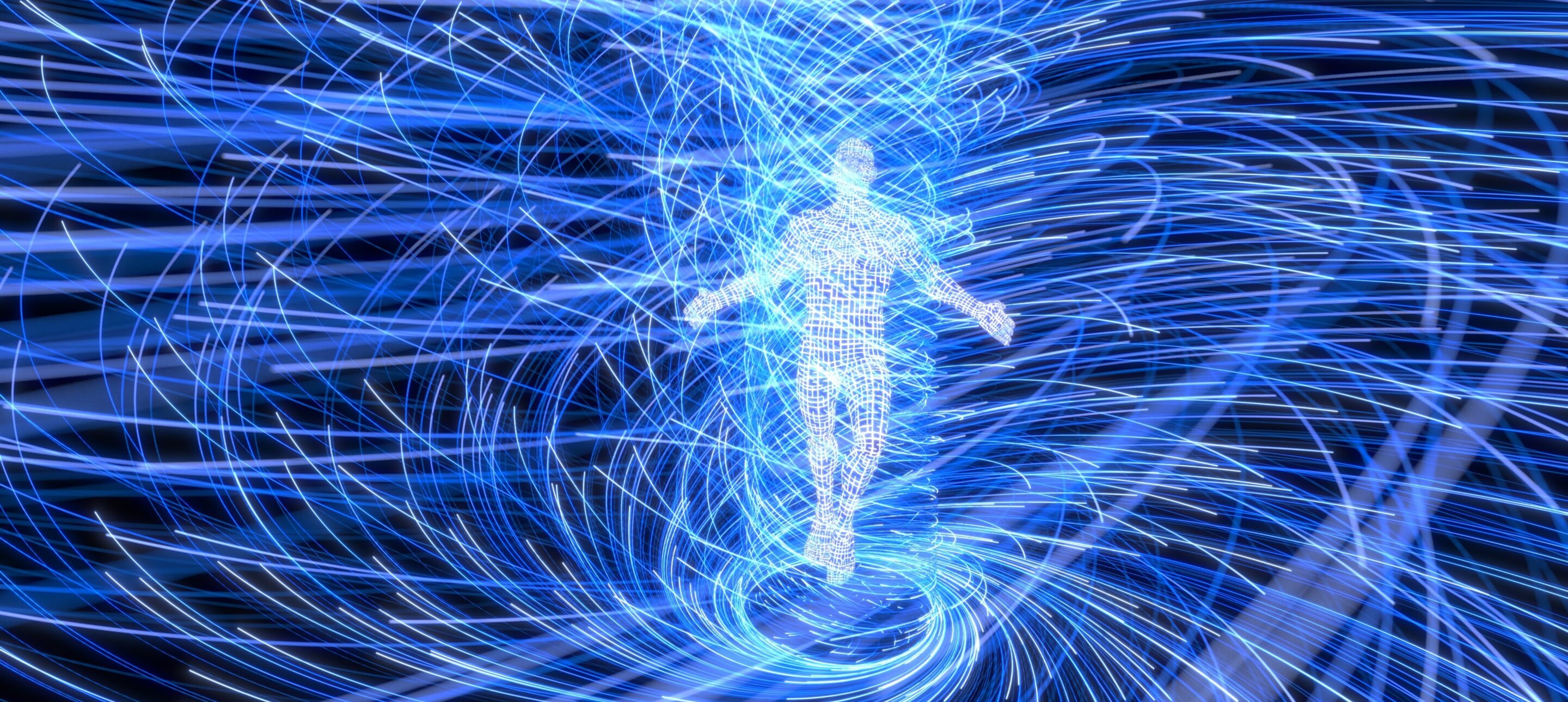
A growing body of research has examined the biological effects of electromagnetic field (EMF) exposure, including the potential role of free radicals and oxidative stress. Dirty electricity—higher-frequency electrical noise or transients traveling along building wiring—is associated with electromagnetic fields that can extend into surrounding living and work spaces. These fields can couple to the body and produce induced voltages and currents.
Researchers have investigated whether these electromagnetic interactions can trigger biological processes that increase the production of free radicals, also known as reactive oxygen species (ROS). Studies involving various types of EMF exposure have reported increased ROS and other markers of oxidative stress, although the mechanisms and their significance for human health remain under investigation. Excessive ROS can damage cellular components such as lipids, proteins, and DNA. When ROS production exceeds the body’s antioxidant defenses, the resulting imbalance is known as oxidative stress.
The Science
From the perspectives of physics and electrical engineering, alternating current (AC) and high-frequency voltage transients (“dirty electricity”) traveling along circuit wiring produce surrounding electric and magnetic fields. When humans or animals are in the vicinity of electrical wiring, these fields can **physically couple to the body and induce weak internal currents and voltages.**¹
Research on EMFs and Oxidative Stress
The review article Effects of Electromagnetic Fields Exposure on the Antioxidant Defense System summarizes research examining EMF exposure, free-radical production, and oxidative stress:
“Technological devices have become essential components of daily life. However, their deleterious effects on the body, particularly on the nervous system, are well known. Electromagnetic fields (EMF) have various chemical effects, including causing deterioration in large molecules in cells and imbalance in ionic equilibrium. Despite being essential for life, oxygen molecules can lead to the generation of hazardous by-products, known as reactive oxygen species (ROS), during biological reactions. These reactive oxygen species can damage cellular components such as proteins, lipids and DNA. Antioxidant defense systems exist in order to keep free radical formation under control and to prevent their harmful effects on the biological system. Free radical formation can take place in various ways, including ultraviolet light, drugs, lipid oxidation, immunological reactions, radiation, stress, smoking, alcohol and biochemical redox reactions. Oxidative stress occurs if the antioxidant defense system is unable to prevent the harmful effects of free radicals. Several studies have reported that exposure to EMF results in oxidative stress in many tissues of the body. Exposure to EMF is known to increase free radical concentrations and traceability and can affect the radical couple recombination.”
The BioInitiative Report has also compiled abstracts from more than 250 studies examining radiofrequency radiation (RFR), free-radical production, and oxidative stress. View the compilation HERE.
These findings raise important questions about the biological effects of EMF exposure and the potential significance of electromagnetic fields associated with dirty electricity. What effects might sustained exposure to these fields have on health? And what practical steps can people take to better understand and reduce dirty electricity in their environments?
¹ According to established bioelectromagnetic models, time-varying electric and magnetic fields can induce internal electric fields and currents in the human body. ICNIRP’s 2010 guidelines address these interactions in the 1 Hz–100 kHz frequency range, with some guidance extending to higher frequencies (International Commission on Non-Ionizing Radiation Protection [ICNIRP], 2010; see also Institute of Electrical and Electronics Engineers [IEEE], 2019).