
Is Dirty Electricity Real?
Yes. And there Is Published Research Connecting It to Human Health
by Rich Lear
Google Gemini acknowledges that dirty electricity is real—then dismisses its potential health effects and commercial filters as “largely a scam.” But what does the published scientific research tell us?
Dirty electricity is real. That is not in dispute.
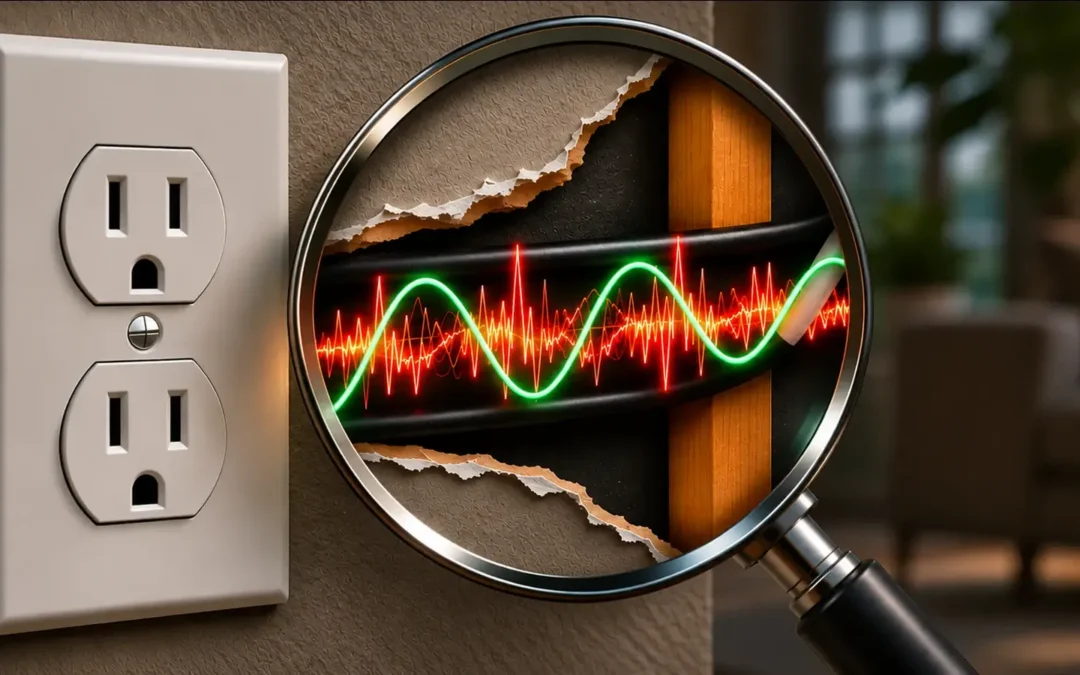
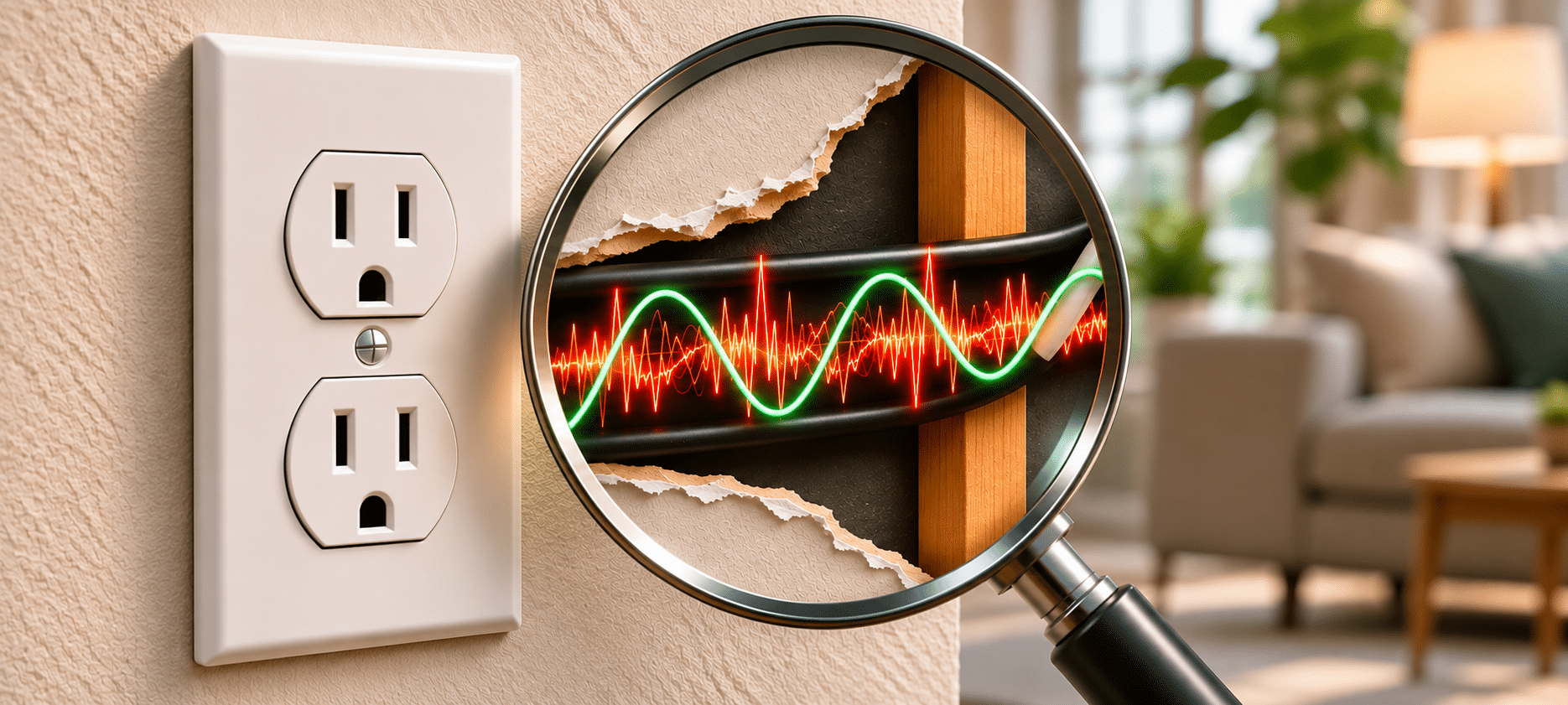
Dirty electricity is the popular term for unwanted higher-frequency electrical disturbances superimposed on the normal 60 Hz electrical power flowing through our homes, schools, workplaces and other buildings.
These disturbances, which include high-frequency voltage transients and components of conducted electromagnetic interference (EMI), can be generated by everyday electronics, including computers, LED lighting, appliances, switching power supplies and solar inverters.
The phenomenon is well established in electrical engineering. It can be measured with appropriate instruments, and selected frequency components can be reduced using electrical filtering.
The controversy is not whether these disturbances exist. It is whether the electromagnetic fields associated with them can affect human health—and whether commercially available filters can meaningfully reduce the relevant exposure.
Gemini’s sweeping dismissal overlooks published health research
When asked whether dirty electricity is real, Google’s Gemini responded:
Yes. “dirty electricity” (also called electrical noise, harmonic distortion, or voltage transients) is a real physical phenomenon in engineering, but the health claims and expensive commercial filters sold to homeowners are largely a scam.
That is a sweeping characterization of a subject that deserves a more careful scientific examination.
There are peer-reviewed studies examining associations between dirty electricity (high-frequency voltage transients and electrical disturbances) and human health. Some have investigated cancer incidence. Others have examined changes in symptoms and well-being following the installation of electrical filters.
These studies do not conclusively establish that dirty electricity causes disease or that filters provide medical benefits. But they contain specific observations, measurements and findings that deserve evaluation.
The existence of preliminary evidence is not proof of a health hazard. Equally, the absence of definitive proof is not grounds for dismissing every finding or every electrical-filtering product as fraudulent.
Study 1: Cancer incidence associated with high-frequency voltage transients
In 2008, epidemiologist Samuel Milham and engineer L. Lloyd Morgan published a study in the American Journal of Industrial Medicine examining cancer incidence among teachers at a California middle school.
Among 137 teachers, researchers identified 18 cancers, compared with approximately 6.5 expected cases.
They also reported an association between estimated cumulative exposures and dirty electricity (high-frequency voltage transients) and increased cancer incidence.
The findings raised an important question: Could an electrical exposure not adequately captured by conventional 60 Hz measurements contribute to observed health outcomes?
The study was observational and involved a single school. The researchers could not directly establish each teacher’s exposure or eliminate all alternative explanations.
Nevertheless, the reported association was substantial enough to warrant further research.
Study 2: Filtering electrical disturbances and changes in teacher well-being
A second study, published in Science of the Total Environment in 2008, examined electrical filtering in three Minnesota schools.
Researchers Magda Havas and Angela Olstad installed functioning and dummy electrical filters and asked teachers to report on their health and student behavior over eight weeks.
Teachers were unaware of which type of filter was installed during each phase.
The investigators reported:
- 94% average reduction in measured high-frequency electrical disturbances across the schools.
- 64% of participating teachers showed overall improvements in reported well-being.
- Reported improvements included headaches, weakness, mood, fatigue, skin irritation and other symptoms.
- Elementary and middle-school classrooms showed improvements in student-behavior measures, including focus, responsiveness and classroom participation.
This research is particularly relevant because it examined an intervention: changing electrical conditions using functioning filters and comparing reported outcomes with periods when dummy filters were installed.
The study was single-blind, not randomized, and relied primarily on teacher-reported outcomes. These limitations prevent a firm conclusion that the filters caused the observed improvements.
Still, the findings provide a concrete reason to investigate whether electrical disturbances, and changes in those disturbances, can influence human well-being.
Study 3: Diabetes, multiple sclerosis and reported responses to filtering
In 2006, Magda Havas published Electromagnetic Hypersensitivity: Biological Effects of Dirty Electricity with Emphasis on Diabetes and Multiple Sclerosis in Electromagnetic Biology and Medicine.
The paper described individual cases and observations in which filtering electrical disturbances was followed by reported changes in symptoms and physiological measurements.
Among the reported findings were changes in blood glucose and insulin use in a person with diabetes, as well as positive changes in symptoms reported by individuals with multiple sclerosis (MS).
These were preliminary observations rather than large, controlled clinical trials. They cannot establish that electrical filtering treats diabetes, multiple sclerosis or other medical conditions.
But they add another dimension to the research: investigators have examined specific physiological and health-related outcomes, not merely subjective impressions of electrical environments.
Taken together, these three publications provide a basis for investigating potential relationships between high-frequency electrical disturbances, exposure conditions and human health.
How can electrical disturbances interact with the body?
Chain of Causation
The potential connection begins with established electrical physics.
Dirty Electricity (high-frequency voltage disturbances) on wiring can generate electric and magnetic fields in the surrounding environment. Electromagnetic Radiation (EMR)
These Electromagnetic Fields (EMF) can interact with nearby conductive objects—including with the human body and pets —through capacitive coupling.
Capacitive coupling describes the transfer of electrical influence through an electric field without requiring direct conductive contact.
Milham and Morgan proposed this mechanism as a possible pathway for exposure to high-frequency voltage transients.
Free Radical Connection: Researchers studying electromagnetic fields (EMF) have linked EMFs in more than 263 studies to potential biological effects involving reactive oxygen species, commonly known as free radicals.
Reactive oxygen species are normal components of cellular biology. However, when their production exceeds the body’s regulatory and protective capacity, oxidative stress can occur.
Oxidative stress is implicated in cellular injury and numerous chronic disease processes.
The physical mechanism of coupling is established. Despite more than 260 studies making the connection between EMFs and disease, mainstream science continues to investigate the proposed progression from ordinary dirty-electricity exposure to clinically significant oxidative stress and chronic health conditions and disease.
Dirty electricity is widespread—and measurable
At Greenwave, we have measured EMI/ dirty electricity (high-frequency voltage leakage/ electrical disturbances) and installed filters in more than 1,000 homes and buildings.
In those installations, we have never encountered a location with a reading below 20 millivolts using our measurement method. Dirty electricity is ubiquitous. .
These are Greenwave’s field observations, not a nationally representative scientific survey. They nevertheless illustrate how consistently measurable levels of dirty electricity have appeared in the buildings we have examined.
The proliferation of modern electronics creates numerous potential sources of dirty electricity. (conducted electrical interference).
For consumers interested in understanding their electrical environment, the starting point should be measurement rather than speculation.
Do commercial dirty-electricity filters actually work?
Electrical filtering is an established engineering technology. But the performance of any particular filter must be demonstrated through testing. Greenwave filters were designed in partnership with Astrodyne, a major EMI filtering company. The filters are the most sophisticated filtering solution available, including using as many as 7 capacitors in various filter models.
Greenwave has sold more than 200,000 plug-in filters designed to reduce selected high-frequency voltage disturbances on building wiring. The results have been positive.
AlphaLab in Salt Lake City, Utah, has also tested EMI filters similar to Greenwave, including Graham/Stetzer and other filter vendors. The results demonstrate superior performance by Greenwave filters across all filters on the dirty electricity frequency spectrum.
Electrical effectiveness and medical effectiveness must be distinguished.
A filter that reduces EMI/ Dirty Electricity – high-frequency voltage disturbances has demonstrated an electrical result and shows the EMF levels in living spaces can be successfully reduced. There is no direct claim for medical benefit. However, one would have to conclude reducing your exposures to EMFs, which have been associated with free radical production and dozens of modern chronic conditions, has some degree of merit. It should not be dismissed in the way Gemini has done.
What about customers’ experiences?
Greenwave has received more than 100 customer testimonials describing customer observations of health and wellness benefits in their living environments, including better sleep, sharper focus, more energy, and calmer feeling living spaces.
Customer experiences are important sources of questions and hypotheses for further research.
They are not substitutes for controlled clinical studies, and they cannot establish that filtering caused a particular health improvement.
Nevertheless, when customer observations are considered alongside published investigations reporting changes in well-being following electrical filtering, they provide additional motivation for carefully designed research.
The real scientific question
Dirty electricity is real.
Its electrical characteristics can be measured. Its associated fields can interact with surrounding materials and objects. Electrical filters can reduce selected components of conducted interference.
Published research has also reported associations between dirty electricity (high-frequency voltage transients) and cancer incidence, as well as significant changes in reported health and well-being during electrical-filtering interventions in schools and elsewhere. .
These findings are not conclusive. They do not establish that dirty electricity causes chronic disease or that filtering prevents or treats medical conditions.
But neither should they be ignored.
The appropriate scientific response is to replicate the findings, characterize the exposures, independently evaluate filter performance, and investigate whether the observed biological and health-related changes are reproducible.
A blanket characterization of commercial filters and health research as “largely a scam” fails to communicate those distinctions.
Consumers deserve a more precise answer: what is established, what has been observed, what remains uncertain, and what can be measured.
Dirty electricity is real. Health research exists. The findings deserve serious investigation.
Scientific references
- Milham, S., & Morgan, L. L. (2008). A New Electromagnetic Exposure Metric: High Frequency Voltage Transients Associated With Increased Cancer Incidence in Teachers in a California School. American Journal of Industrial Medicine. DOI: 10.1002/ajim.20598.
- Havas, M., & Olstad, A. (2008). Power Quality Affects Teacher Wellbeing and Student Behavior in Three Minnesota Schools. Science of the Total Environment, 402, 157–162. DOI: 10.1016/j.scitotenv.2008.04.046.
- Havas, M. (2006). Electromagnetic Hypersensitivity: Biological Effects of Dirty Electricity with Emphasis on Diabetes and Multiple Sclerosis. Electromagnetic Biology and Medicine, 25, 259–268. DOI: 10.1080/15368370601044192.
Greenwave’s sales figures, installation history, customer testimonials and description of AlphaLab testing are company-reported information. Detailed third-party test results are not reproduced in this article.
This article is the introduction to a forthcoming examination of dirty electricity, capacitive coupling, oxidative stress and the scientific evidence concerning potential biological effects.