by Numan Shaikh | Oct 30, 2025
Dirty electricity is one of five types of EMF pollution increasingly common in and around homes and other buildings. It is also referred to as dirty power, electrical noise, line noise, electromagnetic interference (EMI), radio frequency interference (RFI), power line EMI (or RFI), and microsurge electrical pollution.
Technical terms associated with dirty electricity include harmonics (harmonic frequencies) and high-frequency voltage transients. For more information, see the Guide to Dirty Electricity.
Guide to Dirty Electricity
by Numan Shaikh | Oct 30, 2025
Once produced, dirty electricity spreads.
- Some dirty electricity radiates directly into the air from the devices that create it.
- Most is conducted back up the power cords of these dirty electricity sources, where it can then spread throughout a building via the electrical wiring in walls, ceilings, and floors.
- Dirty electricity can also flow up and down the cords of other appliances and devices plugged into electrical outlets.
- It can even move from one home or building to others via power lines and other means such as metal water pipes, grounding conductors, and the earth.
As dirty electricity flows along cords, building wires, power lines, and more, it radiates potentially harmful electromagnetic fields into rooms and other spaces where people spend time.
by Numan Shaikh | Oct 30, 2025
The list of equipment, appliances, and other devices that produce dirty electricity seems endless. Nearly anything we plug in and turn ON today has the potential to generate this type of EMF pollution. This is particularly true of devices that are energy efficient, include a switch mode power supply, and/or have an electric motor (especially a variable speed motor/drive). The box to the right shows examples of common dirty electricity sources in homes and other settings.
- Light dimmer switches
- Energy-efficient light bulbs (CFLs, low-voltage halogen bulbs, “dirty” LEDs)
- Cordless telephones
- Computers
- Internet routers
- Printers, scanners, and copy machines
- Smart TVs
- Video game consoles
- Music entertainment systems
- Battery charging devices (e.g., cell phones, tablets, LED flashlights)
- High-efficiency HVAC equipment
- Pool and well pumps
- Dishwashers
- Microwave ovens
- Refrigerators and freezers
- Equipment or appliances with digital display screens (e.g., stoves, ovens, dishwashers)
- Mixers, blenders, and juicers
- Washing machines and dryers
- Air filters and multi-speed fans
- Sewing machines
- Vacuum cleaners
- Hair dryers
- Electric power tools
- Smart utility meters and appliances
- Solar and wind power systems (inverters)
- Electric car charging stations
- Cell towers (due to electrical operation)
- Some industrial equipment
by Numan Shaikh | Oct 30, 2025
Dr. Samuel Milham, a physician–epidemiologist, spent nearly three decades researching potential health impacts associated with electricity and electromagnetic fields (EMFs). In his book Dirty Electricity: Electrification and the Diseases of Civilization, he discusses observed correlations between EMF exposure and twentieth-century diseases such as cancer, cardiovascular disease, diabetes, and suicide.
He also suggests that dirty electricity and other EMF-related exposure may play a role in conditions including Alzheimer’s disease, multiple sclerosis (MS), amyotrophic lateral sclerosis (ALS or Lou Gehrig’s disease), infertility challenges, and other health concerns. He advocates for continued scientific study to examine these possible associations.
Other researchers and clinicians have similarly reported associations between dirty electricity and various symptoms or conditions, including asthma, behavioral concerns, ADD/ADHD-type symptoms, sleep disturbances, headaches, chronic fatigue, muscle and joint discomfort, fibromyalgia-like presentations, and mood-related symptoms such as depression, anxiety, and irritability.
For further reading, refer to the Guide to Dirty Electricity by Kim Lear.
Guide to Dirty Electricity by Kim Lear.
by Numan Shaikh | Oct 30, 2025
The easiest method for most individuals to measure dirty electricity on building wiring is to use a plug-in EMI (electromagnetic interference) meter, also called a line noise meter or microsurge meter. These devices are simple to operate. Plug the meter into electrical outlets to measure the level of dirty electricity present on nearby wiring.
Plug-in EMI meters measure high-frequency electrical noise riding on the voltage waveform of standard 50/60 Hz electricity. Frequency coverage varies by manufacturer. Although not as broad as that of an oscilloscope, these meters typically monitor a key frequency band commonly associated with dirty electricity.
When selecting a plug-in EMI meter, it is generally recommended to choose a model capable of detecting frequencies from approximately 5 kilohertz (or lower) up to around 1 megahertz. This range helps capture most common dirty electricity signals.
Different plug-in EMI meters use different measurement units, such as millivolts or GS units. Manufacturers typically provide guidance on target levels, allowing users to compare their readings and assess whether dirty electricity levels appear elevated.
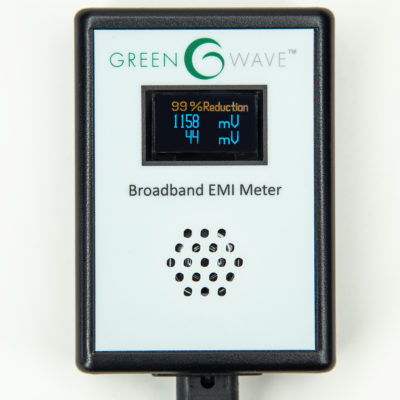
The Greenwave Broadband EMI Meter is one example of a plug-in dirty electricity meter. Plug-in meters like this can be used for multiple purposes, including:
- Measuring dirty electricity on electrical wiring in homes or other buildings
- Estimating levels of dirty electricity entering a building from external sources such as utility lines
- Identifying internal sources of dirty electricity
- Evaluating the effectiveness of dirty electricity filters and mitigation strategies
- Guiding the installation of dirty electricity filters for improved results